Cart
0
Choosing the wrong banquet tables can make a venue feel crowded and limit how guests interact. When tables are poorly arranged, it can leave people feeling uncomfortable and make conversation more difficult.
On the other hand, the right tables and the right layout can completely change the atmosphere. A well-planned setup gives guests space to move around, encourages natural interaction, and complements the event’s theme and size.
In this guide, we’ll walk through the essentials of banquet tables: the different shapes and sizes, how many people each can seat, and the layout options that work best for various event types. With these insights, you’ll be better equipped to plan a space that’s both practical and welcoming.
What are banquet tables?
Banquet tables provide seating for guests during an event. These tables appear at all kinds of gatherings. They are available in several shapes and sizes. Event planners arrange them to suit the space and the number of people attending.
Most banquet tables are built for practicality. Many can be picked up and set aside without much effort. Some have foldable legs for easy storage. Their surfaces are simple and usually need a tablecloth for a finished look. These tables are ideal for large venues that need a quick setup.

What are the most popular banquet table shapes?
Banquet tables come in a range of shapes, each with its own purpose and effect on the event. Choosing the right shape can help you make the most of your space and improve how guests interact.
Below are the most common table shapes used at events, along with when and how to use them.
Round tables
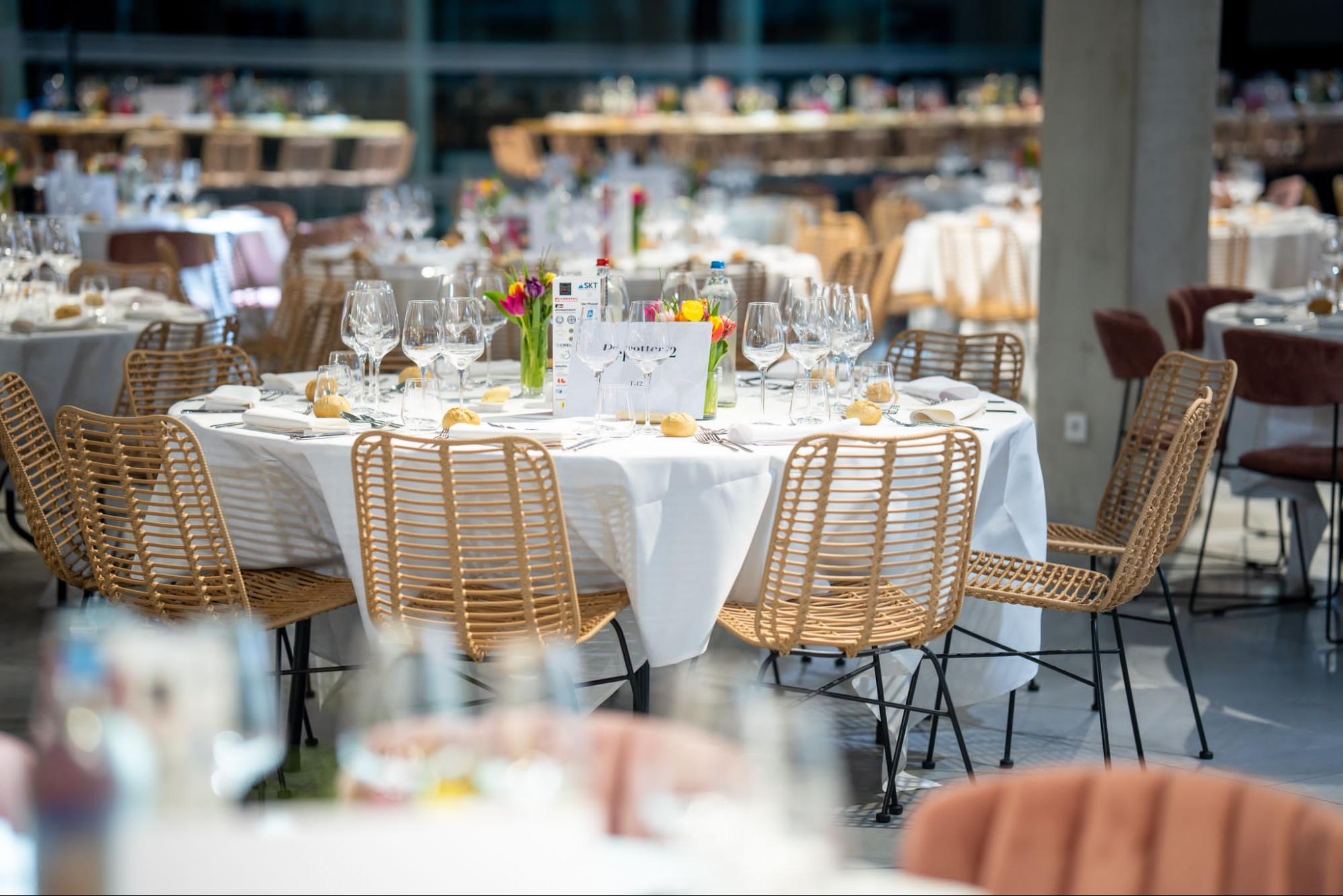
Round tables are a classic choice for weddings, galas, and formal dinners. They help guests see and speak to one another easily, since there’s no "head" of the table. This shape creates a balanced, social feel that works well in many settings.
Round tables also allow for smooth guest movement around the room. They are best used in open spaces where you want a neat, symmetrical layout. However, they may take up more room than other shapes and might not suit narrow venues.
Rectangular tables
Rectangular tables, sometimes called trestle or banquet-style tables, are often used for long rows or communal-style dining. They are a practical option for large events, as they can seat many guests and be placed end-to-end for a longer table setup.
This shape is useful when space is limited, as it fits neatly into corners or narrow rooms. It also allows for clear walkways between rows. However, guests seated at the far ends may find it harder to join in conversations happening elsewhere at the table.
Square tables
Square tables are less common but offer a clean, modern look. They’re ideal for smaller groups and can create a more intimate feel. Each guest sits at an equal distance from the others, making conversation easy.
Square tables can also be combined to form larger layouts, such as long rectangles or blocks. This makes them a flexible option when you want a mix of style and practicality.
Half-round, serpentine, and irregular shapes
Half-round tables are often used as sweetheart tables for couples, head tables, or against walls to save space. They seat fewer people and are best for special seating arrangements.
Serpentine tables have a curved shape and are usually used for buffets, displays, or as visual features. These tables stand out but take up more room and are not often used for guest seating.
Other unique shapes can also add creativity to an event. They offer interesting ways to highlight certain areas or make a design statement.
How many guests can each banquet table seat?
Knowing how many people each table can seat helps you plan your space and make sure guests are comfortable. While you might be able to fit more chairs around a table, it’s best to allow enough room for people to sit, eat, and move easily.
Below is a simple guide to common banquet table sizes and their seating capacities.
|
Table shape |
Common sizes |
Seats |
Best for |
|
Round |
60” (152 cm) |
8 guests |
Weddings, formal dinners |
|
72” (183 cm) |
10 guests |
Large galas, banquets |
|
|
Rectangular |
6’ (183 x 76 cm) |
6–8 guests |
Family-style dining, long layouts |
|
8’ (244 x 76 cm) |
8–10 guests |
Corporate events, buffets |
|
|
Square |
36” (91 cm) |
2–4 guests |
Small groups, modern setups |
|
48” (122 cm) |
4–6 guests |
Intimate seating |
|
|
Half-round |
60” (152 cm) |
2–4 guests |
Head tables, presentations |
|
66” (168 cm) |
3–5 guests |
Against walls or in small spaces |
|
|
Serpentine |
Various curved pieces |
2–6 guests (or for display) |
Buffets, decorative setups |
Tips for comfort and accessibility:
-
Allow at least 60 cm (24”) of table space per person for dining.
-
Leave enough space between chairs so guests can sit and get up easily.
-
For formal events, extra room may be needed for chargers, glassware, and table decor.
-
Make sure there’s enough walkway space between tables, especially if servers are moving around.
By choosing the right table size and following these simple guidelines, you can create a layout that feels open, comfortable, and enjoyable for everyone.

How much space do you need between banquet tables?
Leaving enough space between tables is just as important as choosing the right size or shape. It helps guests move around easily, gives servers room to work, and ensures the venue stays safe and comfortable for everyone.
Rule of thumb
Allow a minimum of 5 feet (1.5 metres) between tables. This measurement includes space for chairs, guest movement, and walkways.
Centre-to-centre spacing guide
Use these measurements as a starting point when planning your layout to give enough room for chairs to slide out and people to pass behind.
-
Round tables: Leave 10 to 11 feet between the centres of adjacent tables.
-
Rectangular tables: Allow 8 to 10 feet between centres, depending on the table width and chair style.
Space planning tips
-
For servers and staff: Ensure there’s at least 90 cm (3 feet) of clear space behind each chair for smooth service.
-
For dance floor or stage access: Leave wider paths (1.5 to 2 metres) around these areas so guests can move in and out without disruption.
-
For fire safety and exits: Keep all walkways, doors, and emergency exits clear. Check local venue regulations if unsure.
-
For guest comfort: Avoid placing tables too close to walls, buffet lines, or speakers. Guests should feel relaxed, not boxed in.

Why our banquet tables stand out
In the furniture rental industry, the term banquet tables usually refers to basic foldable tables. These are functional and easy to set up, but they often have plain or unfinished tops that need to be covered with tablecloths to look presentable.
We take a different approach. Our dining and banquet tables are both practical and visually appealing. Each piece is crafted with high-quality materials and features a beautifully finished top, so there’s no need to cover it. These tables are ready to be part of your event’s design, not hidden under fabric.
One standout example is our Linea XXL table collection. These square tables can be used on their own or connected to form long, seamless layouts. Whether you’re planning an intimate dinner or a large banquet, our tables offer the flexibility, finish, and style to match.
Frequently asked questions
Can you mix round and rectangular tables in one event?
Yes, mixing table shapes can work well and create a more interesting layout. It’s often used to define different areas within the same event space, such as VIP seating, family sections, or buffet zones.
What’s the best banquet table layout for 100+ guests?
It depends on your venue and the type of event. Long rows of rectangular tables are often the most space-efficient. Round tables offer a more formal look and help with guest interaction. A mixed layout can also work well for balancing space and style.
Do your banquet tables require assembly?
No, our banquet tables are delivered fully assembled and ready to use. We also handle setup and collection, so you don’t need to worry about handling or tools.
Can I rent matching chairs and décor?
Yes, we offer a wide range of matching chairs, lighting, parasols, and decorative items to complement your tables. We can help you create a complete, cohesive look.
How early should I book for large events?
We recommend booking as early as possible, especially during peak seasons. For large events, securing your furniture 4 to 6 weeks in advance helps ensure availability and allows time for planning the layout.